3:26 AM Refrigerator Leaking Water: Common Causes & Fixes | |
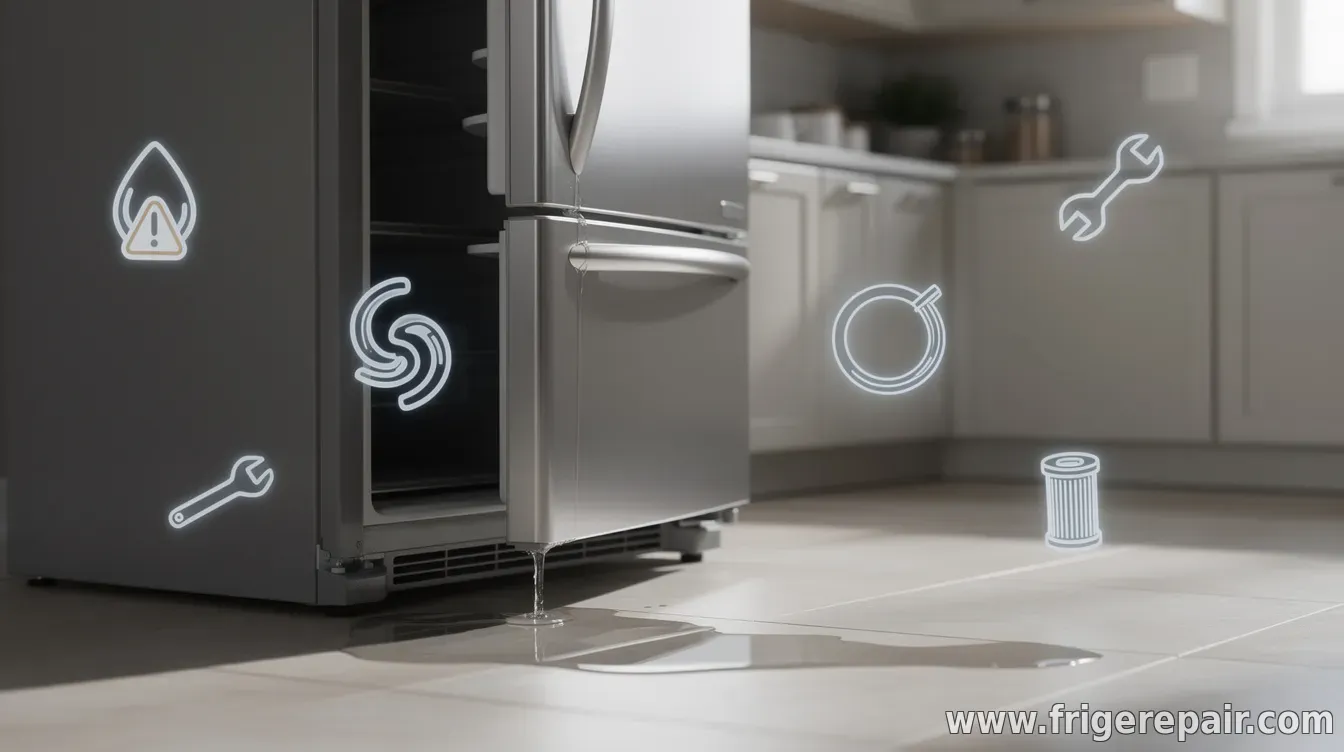 A refrigerator leaking water is more than an annoyance—it can damage floors, create mold risks, and even affect cooling performance. The good news: most leaks come from a handful of common causes, many of which you can troubleshoot quickly with basic steps. 1) Clogged defrost drainOne of the most frequent culprits is a blocked defrost drain. During the defrost cycle, meltwater should flow into a drain pan. If the drain is clogged (often by food particles, dust, or ice buildup), water can back up and pool inside the fridge or run down onto the floor. What to do: Unplug the refrigerator, remove any standing water, and locate the defrost drain. Clean it gently with warm water and—if available—a flexible cleaning tool. If ice is present, allow it to melt before clearing. 2) Ice buildup from airflow or temperature issuesExcess ice can block drainage and cause water to overflow from compartments like the freezer or around air vents. Ice often forms when the refrigerator runs too cold, the door isn’t closing fully, or airflow is restricted by blocked vents. What to do: Check that vents aren’t obstructed by food, verify the temperature settings, and ensure the freezer/refrigerator doors fully close. If heavy ice is present, consider a controlled defrost (with the fridge unplugged) and then reassess the cause. 3) Door seal problems or improper installationIf the door gasket is worn, dirty, or damaged—or if the fridge is slightly misaligned—warm air can enter and increase condensation that eventually becomes water leaks. In some cases, the issue is also related to installation: a refrigerator that isn’t level can cause water to collect where it shouldn’t. What to do: Inspect the door gasket for gaps and clean it with mild soap and water. Test the seal by closing the door on a piece of paper—if it slips out easily, the gasket may need attention. Use a level to ensure the refrigerator is properly aligned. 4) Faulty water line, valve, or filter (for ice makers and dispensers)If your refrigerator has a water dispenser or ice maker, leaks may originate from the water supply line, the shutoff valve, or a connection near the inlet. A poorly seated or clogged filter can also contribute to pressure issues and leaks. What to do: Turn off the water supply, inspect visible connections for moisture, and check whether the filter is installed correctly. Replace the filter if it’s overdue, and tighten connections only to the manufacturer’s specifications. 5) Cracked or mispositioned drain panSome models use a drain pan beneath or behind the refrigerator to collect condensation. If the pan is cracked, warped, or not properly seated, water can spill instead of evaporating or draining as designed. What to do: Pull the refrigerator out carefully and inspect the drain pan location. Replace the pan if it’s damaged and ensure it’s aligned correctly. When to stop troubleshooting and call a professional: If you don’t find a clear blockage, the leak continues after defrost/cleaning, or you suspect a refrigeration component (like the water inlet valve or a sealed-system issue), a technician can diagnose the problem safely and restore reliability. To narrow it down, observe where the water appears (inside the fridge, in the freezer, under the unit, or near the dispenser). Matching the leak location to the cause helps you fix the right issue faster—and reduces the chance of recurring leaks. | |
|
| |
Next & Previous posts
Related articles: