
8:08 AM Mini-Fridge and Bar Fridge Repair: Common Fixes | |
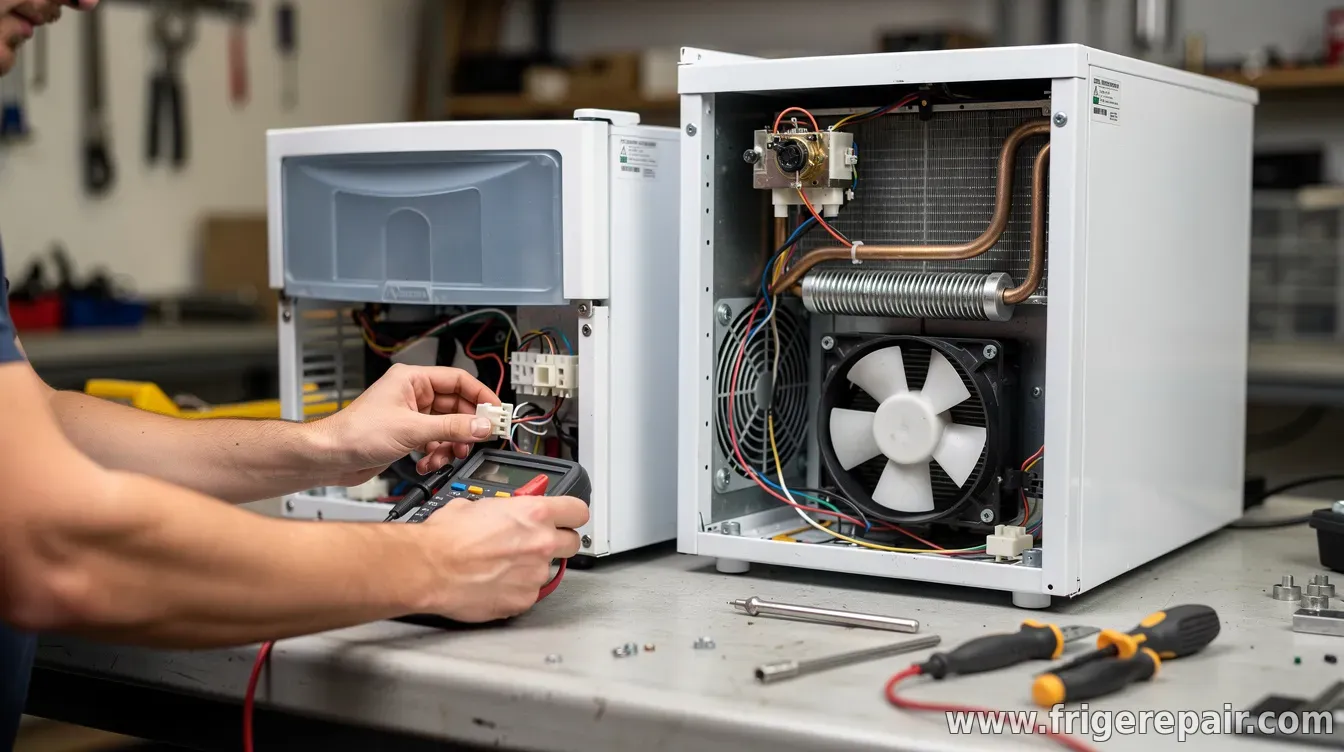 Mini-fridges and bar fridges are convenient for home, offices, and entertainment spaces—but when they stop cooling, they can quickly become unusable. Many failures come from predictable causes, meaning careful, safe troubleshooting can resolve the issue without expensive repairs. Start with the simplest signals. If the unit is completely dead (no lights, no hum), check that the outlet works by plugging in another device. If it has power but won’t cool, listen for the compressor (a low hum or click), and note whether the interior light turns on when the door opens. Those observations help narrow the problem to either power/control, refrigeration components, or airflow. 1) Verify power and basic settingsConfirm the temperature control isn’t accidentally set to the warmest position. If the fridge uses a power switch or has a removable power cord, ensure it’s fully seated. Power-saving modes and “demo” settings on some models can also prevent cooling. When power is intermittent, a faulty outlet, loose cord connection, or internal switch can be the culprit. 2) Fix airflow problems and ice buildupWhen a fridge runs but doesn’t cool well, the issue is often related to airflow. Make sure the vents inside the unit aren’t blocked by food containers or stored items. For models with an evaporator fan or vents behind panels, remove accumulated dust and check whether the fan is spinning when the compressor starts. If ice has formed, it can block airflow; defrosting the unit—typically by unplugging it and letting it thaw fully—can restore normal cooling. 3) Clean condenser coils and check for overheatingDirty condenser coils make the compressor work harder and can reduce cooling performance. Unplug the unit, then gently clean accessible coils with a vacuum brush attachment or a soft coil brush. Avoid bending fins aggressively. If the fridge is located in a tight cabinet or against a wall, ensure there’s adequate clearance for heat dissipation; restricted airflow can cause repeated cycling or weak cooling. 4) Inspect the start relay and fans (when applicable). Some mini-fridges use a start relay or capacitor that can fail, leading to symptoms like a single click followed by silence. Similarly, a non-spinning fan can prevent the system from moving cold air into the compartment. These components are model-specific, so refer to your owner’s manual or the unit’s service diagram before replacing parts. 5) Address unusual noises and odors. A soft vibration or fan noise is normal for many units. However, grinding, repeated clicking, or a fan that rattles could indicate a mechanical issue or loose mounting. Persistent odors usually come from spills, food residue, or moisture buildup—wipe surfaces with a mild cleaner, dry thoroughly, and consider an odor absorber designed for refrigerators. 6) Test the thermostat and temperature control. If the fridge cools briefly, stops, and never recovers, the thermostat or control board may be reading incorrectly. Some units have an adjustable thermostat knob; others rely on electronic control. A proper test typically requires a multimeter and an understanding of the model’s wiring, so if you’re not comfortable with electrical testing, professional service is safer. Before attempting repairs, always unplug the refrigerator and allow time for components to discharge. Don’t open sealed refrigeration lines, and avoid puncturing tubing or attempting to “recharge” refrigerant—these steps require certified equipment and training. If the compressor is running but cooling is absent, the issue could involve a refrigeration leak or compressor failure, which is usually a job for a licensed technician. When to call a professional. If you’ve confirmed power delivery, cleaned coils, cleared airflow paths, fully defrosted, and the fridge still won’t cool, it’s time to escalate. A technician can check compressor performance, test electrical components, and diagnose refrigeration-system faults more accurately than trial-and-error. By starting with the most common causes—power, settings, airflow, defrost/ice buildup, and condenser cleanliness—you can often restore cooling quickly. Even when the fix isn’t DIY, good troubleshooting notes help the service technician identify the root cause faster. | |
|
| |
Next & Previous posts
Related articles:
![]()