
6:50 AM Defrost Heater, Timer and Thermostat: How It Works | |
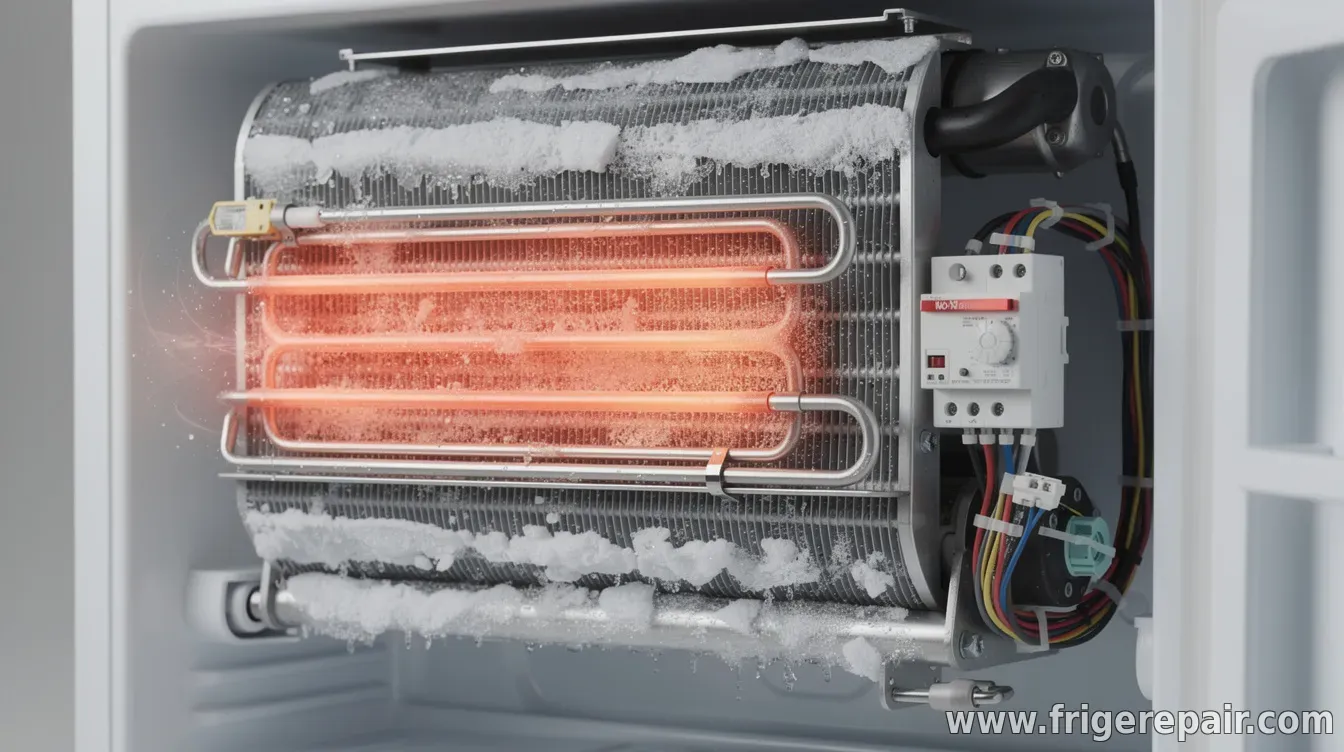 A refrigerator’s defrost system is designed to prevent ice from building up on the evaporator coils. When frost accumulates, it can block airflow and reduce cooling performance. To solve this, the system periodically switches from “cooling mode” to “defrost mode,” using a defrost heater, a control element (often a timer or electronic board), and a thermostat. 1) The defrost heater: turning frost into meltwaterThe defrost heater is the component that actually provides the heat during defrost. In many units, it’s an electric heating element mounted near the evaporator coils. When the refrigerator enters defrost mode, the heater warms the coils enough to melt ice and frost. As the ice melts, the water typically drips into a drain channel and flows to a drain pan. In many designs, a separate mechanism—often a small heater or airflow—evaporates the water from the pan to prevent pooling. 2) The defrost timer (or electronic control): when defrost happensDefrost needs to occur at the right intervals. In older or simpler designs, a defrost timer schedules defrost cycles based on compressor run time. The timer’s job is to interrupt normal refrigeration operation at set points and energize the defrost heater. In newer refrigerators, the timer may be replaced by an electronic control board that monitors conditions (such as compressor runtime, temperature readings, and sensor behavior) to decide when to initiate defrost. Regardless of whether it’s a mechanical timer or electronic controller, the logic is the same: it decides when to run the heater. 3) The defrost thermostat: stopping defrost at the right momentThe defrost thermostat (sometimes called a defrost terminator or thermoswitch) ensures the defrost cycle ends when the coils have reached a safe temperature. Without a temperature-based cutoff, the heater could keep running longer than necessary, which may waste energy or even overheat components. During defrost, the thermostat monitors coil temperature. Once the coils warm past its set threshold, it opens the circuit to shut off the heater and allows the refrigerator to return to cooling mode. How a full defrost cycle typically plays outA standard defrost cycle usually follows this sequence:
Because frosting reduces heat transfer, restarting the system after defrost helps restore airflow and cooling efficiency. Common signs the system may have a problemIf the defrost components malfunction, the refrigerator may exhibit symptoms such as reduced cooling, frost accumulation on the evaporator cover, or irregular temperatures. For example, a heater that doesn’t run can lead to heavy frost buildup over time. A thermostat that fails to open may cause the heater to keep running too long. Conversely, a timer/control that never initiates defrost can produce the same result as a failed heater: persistent ice. It’s also possible for issues to originate outside the heater/timer/thermostat—such as blocked vents, door seal problems, or faulty sensors—but the defrost system is often the first place to look when frost won’t clear. If you’re troubleshooting, always consult the appliance’s service manual for component locations and electrical specifications. Repairs may involve high temperatures and electrical parts, so safety steps—like unplugging the unit and verifying readings—matter. Understanding how the defrost heater, timer/control, and defrost thermostat interact can help you interpret what you’re seeing and narrow down the likely cause when frost builds up unexpectedly. | |
|
| |
Next & Previous posts
Related articles:
![]()