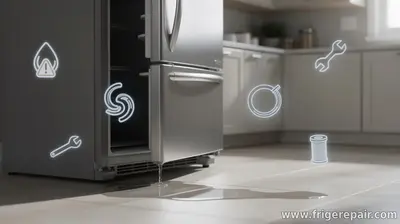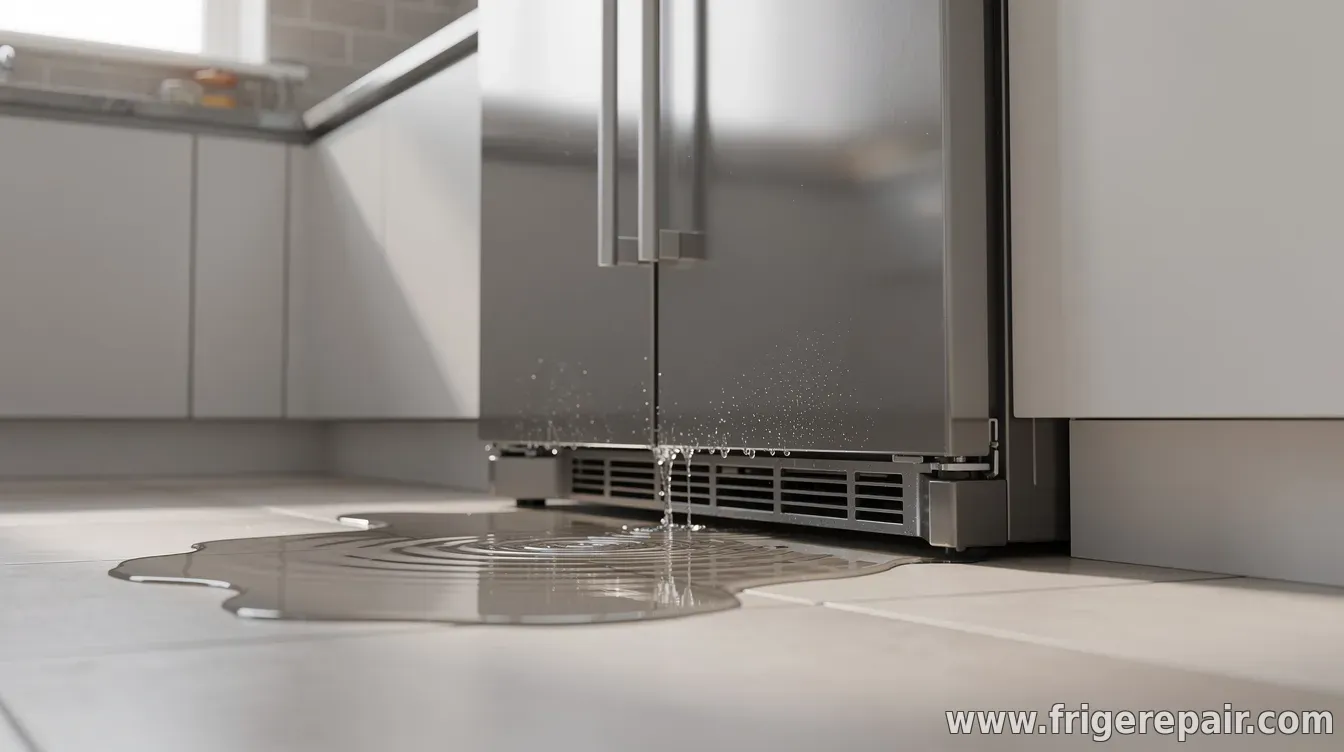
If you notice water pooling around (or inside) your refrigerator, it’s often due to a problem with the defrost system, the water drainage path, or—if you have an ice maker or water dispenser—the supply line. Pinpointing the location of the leak is the fastest way to narrow down the cause and decide whether it’s a simple DIY fix or something that needs a technician.
Check where the water is collecting. Water under the fridge often points to a drain or defrost issue, while water on the shelves or in the back wall area can indicate a clogged internal drain or an ice buildup that’s melting. If the leak is specifically near the ice maker or dispenser, the water line is a more likely suspect.
Common causes and what to do
1) Clogged or frozen defrost drain
Most refrigerators use a defrost cycle to melt frost off the evaporator coils. Meltwater flows into a drain line and then to an evaporator pan. If the drain is clogged (by dust, food particles, or ice), water can back up and leak. Try cleaning the drain area and clearing the drain opening. If you suspect it’s frozen, give the fridge time to fully thaw before attempting to clear it.
2) Ice buildup in the freezer or back panel
A partially blocked air pathway, temperature issues, or a problem with the defrost heater can cause ice to form and then melt into unwanted places. Look for unusual frost patterns behind interior panels or in the back corner of the fridge/freezer. If the buildup keeps recurring, the defrost system may need professional inspection.
3) Dirty or misdirected drain pan
In many models, water ends up in a pan underneath the refrigerator where it evaporates. If the pan is cracked, mispositioned, or overflowing, you may see consistent pooling. Check for visible damage and ensure the pan is correctly installed (if your model allows safe access).
4) Water line leaks (ice maker or water dispenser)
If water appears connected to the door area, dispenser area, or near the back of the fridge, the supply line may be leaking. Small leaks can come from a loose connection, a damaged tube, or a failing valve. Inspect the tubing (carefully, with the fridge unplugged if needed) and look for moisture around fittings.
5) Condensation from airflow or door seals
Poor door sealing, an overly warm environment, frequent door openings, or blocked vents can lead to excess condensation that eventually becomes pooling water. Test the door gasket for gaps and check that vents inside aren’t obstructed by food containers.
Quick troubleshooting steps you can do now
- Wipe up the water and note the exact location (under the fridge, behind a back panel, inside the fridge, near the dispenser/ice maker).
- Check whether the leak seems tied to defrost timing (often recurring in cycles) or to daily water/ice use.
- Inspect the visible drain area in the back of the refrigerator compartment for blockages.
- If you have a water/ice dispenser, look for moisture along the water line connections near the rear.
- Confirm the refrigerator and freezer temperatures are set correctly and not running unusually warm.
When to call a professional—especially if the issue keeps returning—consider a technician if you find repeated ice buildup, a persistent drain blockage that won’t clear safely, or evidence of an internal water leak near electrical components. Leaks involving water lines or valves can also lead to damage if not addressed promptly.
By identifying where the water appears and matching it to the most likely subsystem—defrost drain, defrost heater/ice buildup, drain pan, water line, or condensation—you can resolve many refrigerator leaks quickly and prevent them from coming back. |