
10:06 AM Dishwasher Not Draining: Step-by-Step Troubleshooting | |
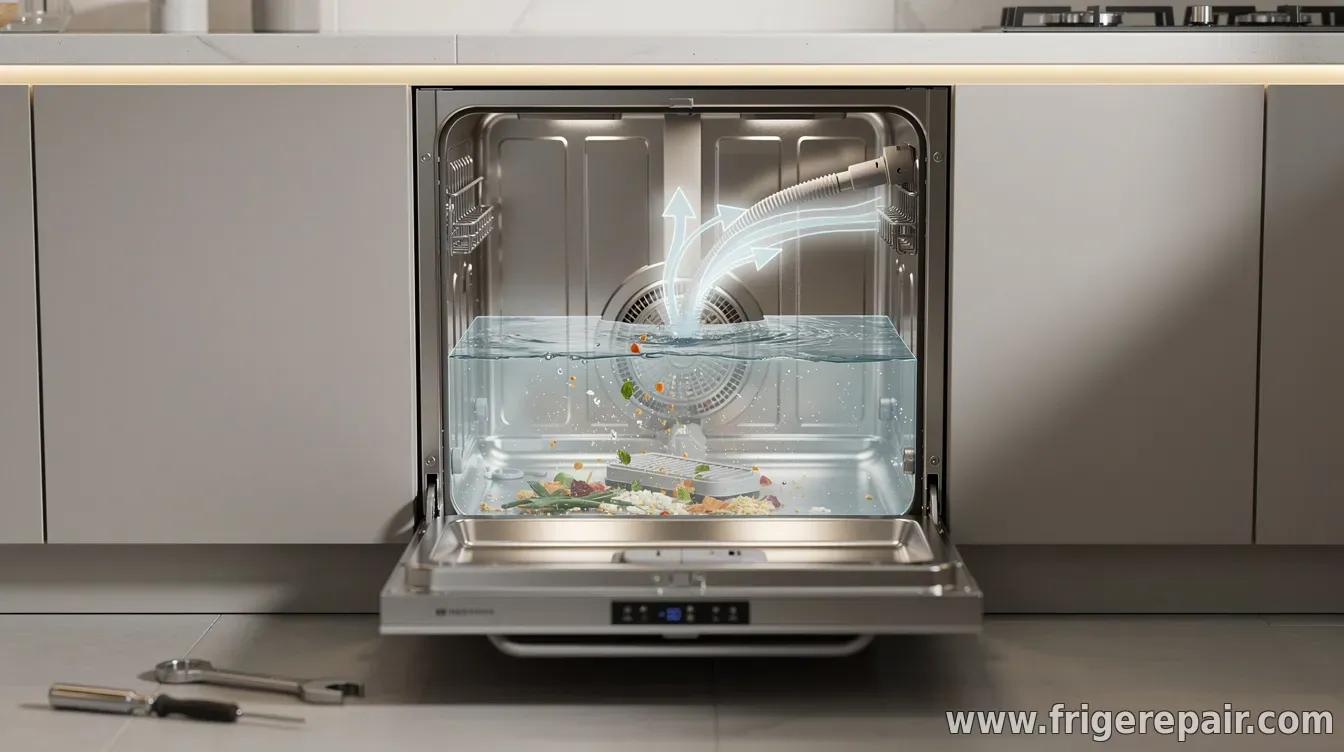 If your dishwasher stops mid-cycle or leaves standing water at the bottom, the most likely culprit is restricted drainage. In most cases, you can restore normal operation by working through the common failure points in order: filters and sump, drain hose, air gap (if installed), and the drain pump. Before you begin, turn off power to the dishwasher (switch off at the breaker or unplug it). If there’s standing water, soak it up with towels or a wet/dry shop vacuum so you can clearly see the sump area and drain path. 1) Check the filter, spray arm, and sump areaDishwashers rely on a filter to catch food particles. When it’s clogged, water can’t circulate and drains poorly. Remove the bottom rack, then take out the filter assembly (typically a flat screen plus a fine mesh filter depending on the model). Rinse thoroughly under running water, and use a soft brush to remove any packed debris. Next, inspect the sump area where the filter sits. Look for trapped objects (labels, bone fragments, small glass pieces) that could block the drain opening. Also check that the lower spray arm can spin freely—obstructions can affect circulation, which in turn can worsen draining. 2) Inspect the drain hose and connectionA kinked, crushed, or poorly connected drain hose can prevent water from leaving the tub. Check the dishwasher’s drain hose under the sink (or behind the unit, if accessible). Look for bends that force a high “loop,” kinks, or sections pinched by cabinets or flooring. If your dishwasher connects to a garbage disposal, confirm the disposal knockout plug has been removed. A clogged or blocked disposal connection can stop drainage even if the dishwasher internals are clean. 3) Verify the air gap (if you have one)Some installations include an air gap on the sink or countertop. If it’s blocked by debris or buildup, water may back up and the dishwasher won’t drain properly. Remove the air-gap cap (if your model allows), then clean the internal parts with warm water and a soft brush. Run a short test cycle after reassembly. 4) Confirm the drain pump and impeller are clearThe drain pump pushes water through the system. If the pump can’t move water, you may hear hums but see no draining, or the cycle may stall. With power off, access the pump area from the bottom of the dishwasher. Remove any debris around the pump inlet and check the impeller for free movement. If you find the impeller jammed by a fragment of glass or plastic, carefully remove it. Avoid forcing components; if the impeller won’t turn freely after clearing debris, the pump may be failing and could require replacement. 5) Try a controlled test after each fixTo narrow down the cause, run a short “rinse” or quick cycle after cleaning the filter and checking connections. If the dishwasher still leaves water behind, move on to the next step. This approach helps you avoid replacing parts unnecessarily and identifies whether the issue is on the tub side (filter/pump) or the household drain side (hose/air gap/disposal). When to stop and call a professionalStop troubleshooting and seek service if you notice burning smells, repeated circuit trips, persistent water pooling after clearing the pump and hose, or signs of active leaks around wiring or the pump assembly. Electrical components inside appliances can be hazardous, and a technician can safely diagnose pump failure, control faults, or drainage system problems. By following this sequence—filter and sump first, then hose/disposal/air gap, and finally the drain pump—you can resolve most “not draining” issues quickly and confidently. | |
|
| |
Next & Previous posts
Related articles:
![]()
![]()