8:36 AM Freezer Burn: What It Is, Food Safety, Prevention |
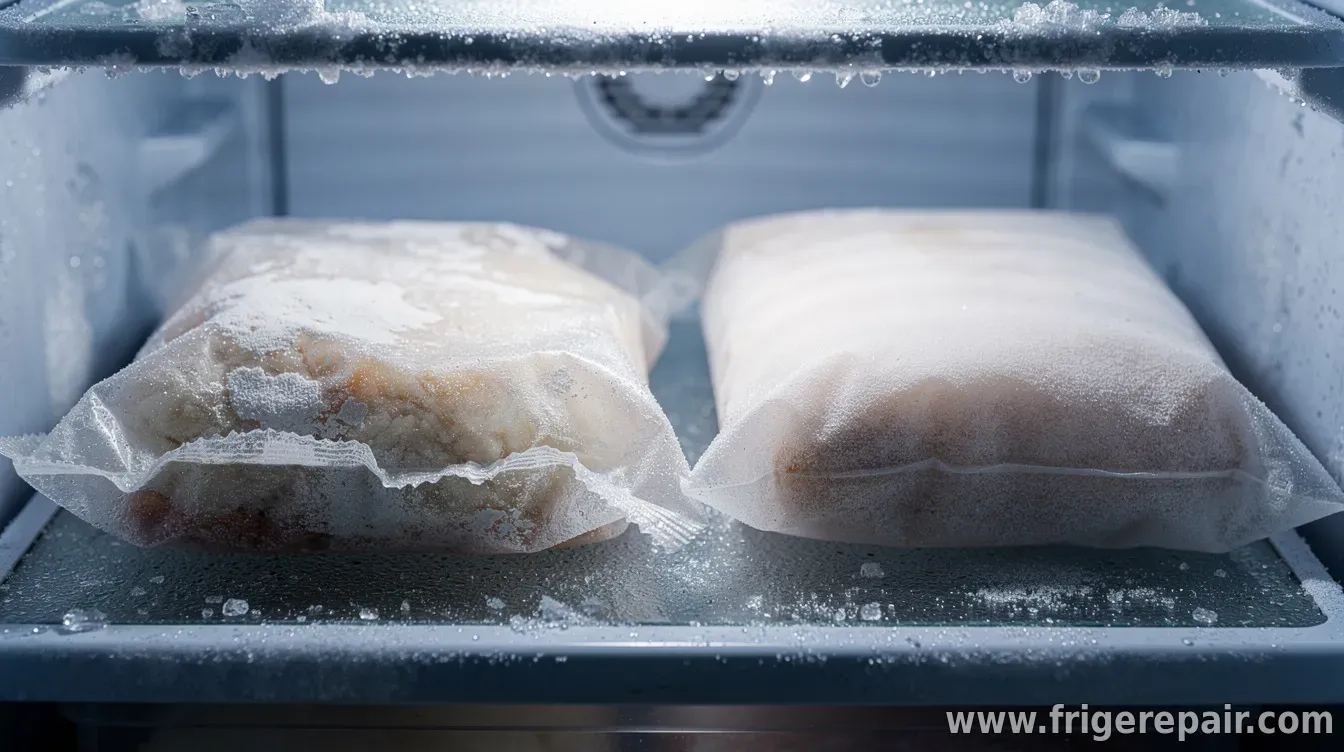 Freezer burn is a common freezer problem that can make food look unappetizing—dry, pale, or even slightly frosted at the surface. Despite the name, freezer burn is more about quality loss than safety risk. It occurs when air reaches the food. That air pulls moisture from the surface (and can also affect fats), leaving the outer layer dried out and discolored. The result is often a tougher texture and dull flavor, even if the inside of the food remains largely unchanged. What freezer burn looks likeYou might notice whitish or gray-brown patches on meat, poultry, fish, or prepared foods, sometimes with ice crystals or a leathery texture. The edges are usually the most affected areas, where packaging has gaps or the food has been exposed to air for longer periods. Freezer burn can happen faster when food is placed in the freezer while still warm, when containers aren’t sealed well, or when packages are frequently opened and closed. Large temperature swings—common in freezers with loose seals—also increase the chance of drying out. Is food with freezer burn safe to eat?In most cases, yes. Freezer burn generally indicates dehydration and oxidation, not bacterial growth. Since freezing stops microbial activity, freezer-burned food is typically safe from a contamination standpoint—as long as it was frozen properly and hasn’t been thawed for long periods. However, “safe” doesn’t always mean “good.” The quality drop can be significant, especially for foods like fish, where fats can become stale or develop an off flavor. If there are signs of spoilage beyond freezer burn—such as a strong sour odor, visible mold, or slimy texture after thawing—discard the food. How to use freezer-burned foodIf freezer burn is limited to the surface, you can often improve the eating experience by trimming affected areas. Remove the dry or discolored parts, then cook or prepare the food as usual. For best flavor, consider using freezer-burned items in dishes where seasonings and cooking methods help, such as soups, stews, casseroles, or sauces. For items with extensive freezer burn—large areas dried out or significant texture changes—the best option may be to replace them. While it’s still often safe, the difference in taste and texture may not be worth the effort. How to prevent freezer burnPrevention comes down to reducing food’s exposure to air and protecting it from moisture loss. Key steps include:
By limiting air contact and storing food under stable freezing conditions, you can dramatically reduce freezer burn and keep frozen meals tasting closer to fresh. Bottom line: freezer burn is usually a quality issue, not a safety one. When in doubt, look for spoilage signs after thawing—and when quality is clearly compromised, trimming or replacing food is the smarter choice. |
|
|
Next & Previous posts
Related articles: