7:42 AM Oven Self-Clean vs Steam Clean: Safety Explained | |
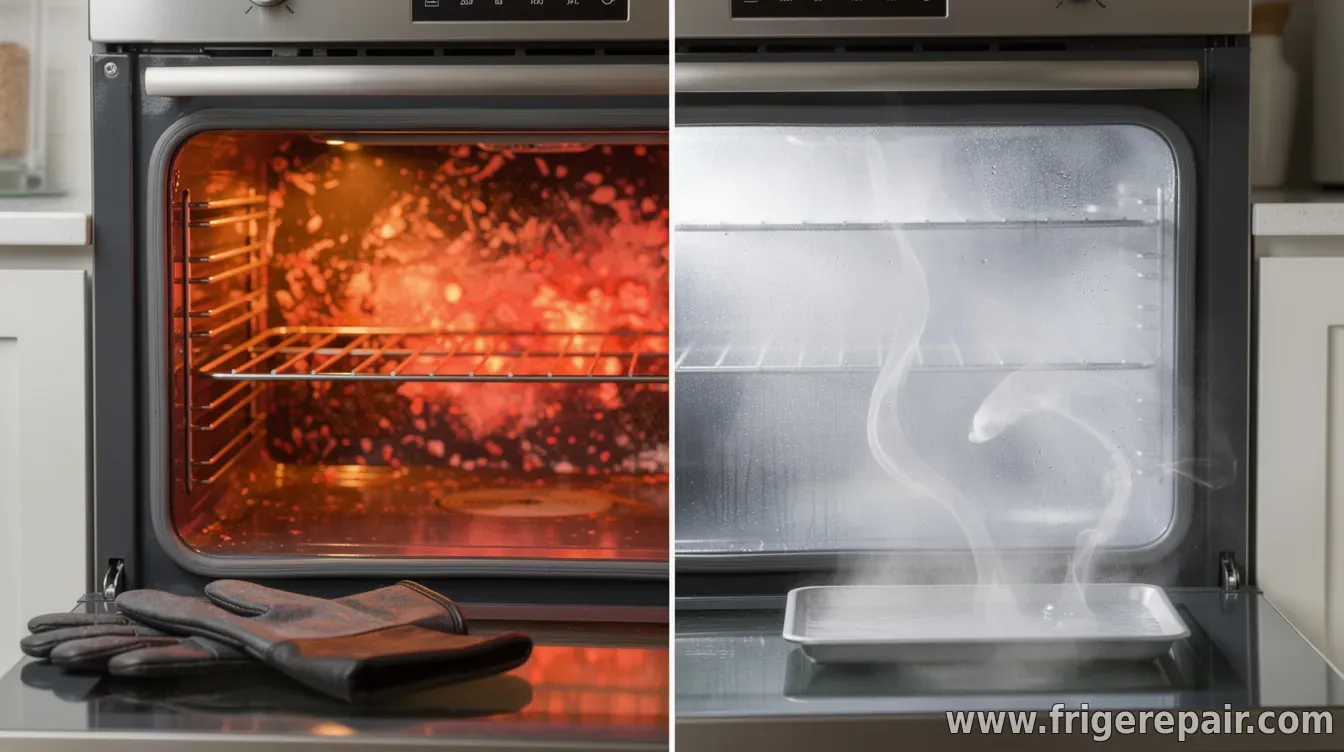 Oven “self-clean” and “steam clean” settings both promise easier cleanup, but they work in very different ways—and that difference matters for safety. The short answer: self-cleaning is typically safe when you follow the manufacturer’s instructions, while steam cleaning is often the more comfortable option for households sensitive to smoke, odors, or fumes. This guide compares how each method works, what safety risks to watch for, and when steam cleaning may be the better choice. How oven self-clean worksSelf-cleaning cycles use intense heat—often around 800°F to 900°F —to break down food residue on the oven’s interior. Many ovens also lock the door during the cycle to prevent accidental exposure. Because the temperature is so high, self-cleaning can create smoke-like odors and airborne particulates, especially if there’s heavy grease buildup or spills. Safety factors to consider with self-cleanMost safety concerns are tied to misuse or unusual conditions. To reduce risk, check for any manufacturer warnings and follow these common precautions:
If you notice persistent smoke, strong burning smells beyond normal residue breakdown, or unusual error behavior, stop the cycle according to the manual and let the oven cool fully before investigating. Steam cleaning: a gentler alternativeSteam cleaning typically uses water (sometimes with a recommended cleaning solution) to generate steam that loosens grease and food particles. Because it usually operates at far lower temperatures than self-clean, steam cleaning generally produces fewer fumes and is often perceived as “safer” for everyday use—particularly in smaller kitchens or homes with fragrance or air-quality sensitivities. However, steam cleaning may require more time and elbow grease, and it may not fully remove thick carbonized buildup. For that reason, many owners use steam cleaning regularly and reserve self-clean for occasional deeper maintenance. Which method is safer for your oven—and your home?For most households, both methods can be safe when used properly, but their risk profiles differ: Choose self-clean if your oven has significant baked-on grime, you can ventilate well, and your manual permits the cycle based on your current condition (including any spill amounts on the bottom or sides). Choose steam clean if you want a lower-odor, lower-heat routine cleaning; you’re cleaning soon after typical cooking; or you’re concerned about fumes and air quality. When in doubt, start with steam. It’s often the less disruptive option, while self-clean can serve as a periodic reset when buildup becomes harder to remove. Maintenance tips that improve results and safetyGood cleaning habits reduce both safety concerns and effort. Consider wiping the oven after messy cooking (once cooled), using liners where appropriate, and keeping spills from baking on. Also remove or cover any accessories according to your model’s guidance—some racks or attachments may not be intended for certain cycles. Ultimately, the “safe” method is the one that matches your oven’s design and your current level of buildup. Read your oven’s manual for temperature limits, door-lock behavior, recommended preparation steps, and what parts are safe to clean during each setting. With proper ventilation, preparation, and adherence to manufacturer instructions, both self-clean and steam clean can be effective—and safe—ways to keep your oven working at its best. | |
|
| |
Next & Previous posts
Related articles: