3:36 AM Why Your Refrigerator Clicks: Start Relay & Overload Explained |
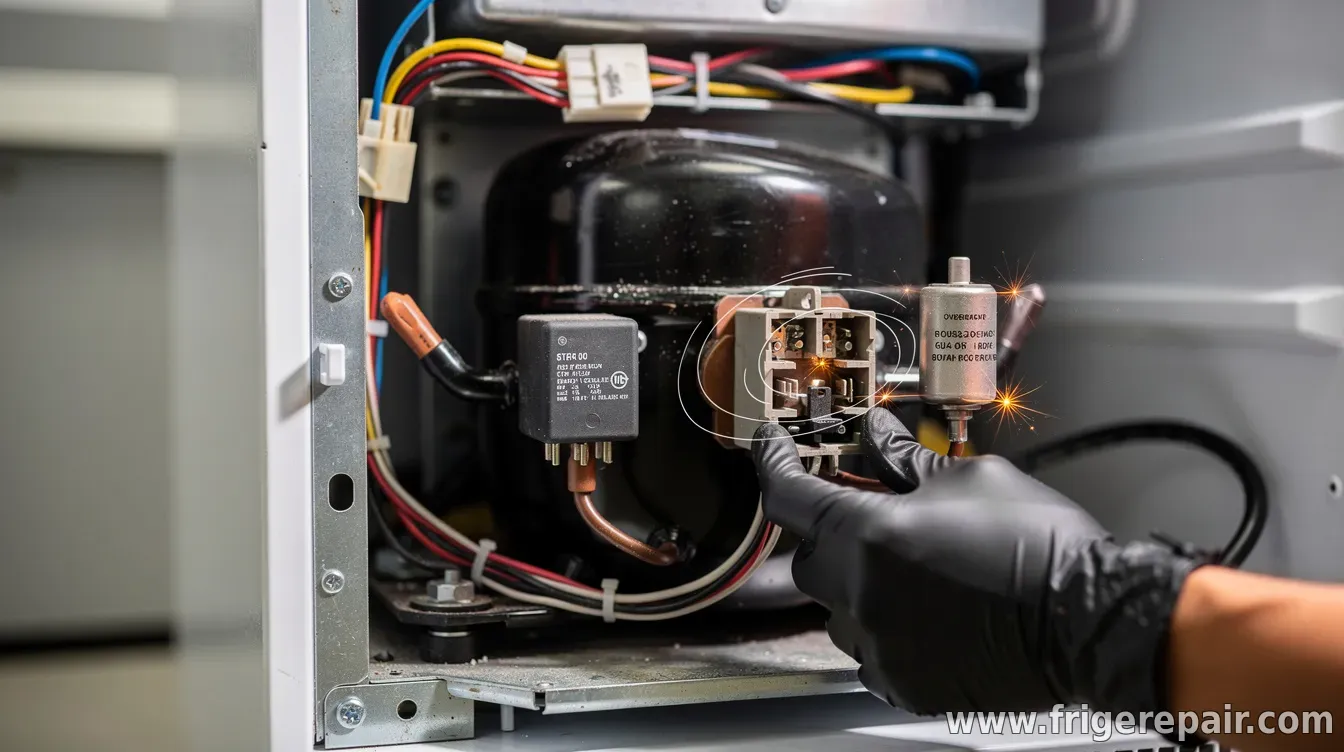 If your refrigerator has started making a clicking noise, it’s usually tied to how the cooling system starts and protects the compressor. Most refrigerators use an overload protector and a start relay (sometimes called a start device) to help the compressor begin running and to prevent it from overheating or drawing too much current. These components can produce brief, periodic clicks—especially when the thermostat calls for cooling. Understanding the normal sequence can help you tell the difference between “typical cycling” and a problem that needs repair. What the start relay doesThe compressor needs extra electrical “start torque” when it turns on. The start relay provides that boost using a switching mechanism that typically engages for a short moment. When the relay switches from the start mode to the running mode, it can produce a noticeable click. On many refrigerators, you’ll hear this click when cooling begins or after the unit has been off briefly. If the noise is brief and happens in a predictable cycle, it may be part of normal operation. How the overload protector worksThe overload protector is a safety device designed to interrupt the compressor’s electrical circuit if the compressor draws too much current or overheats. When triggered, the protector can open the circuit and then—after a cooling-off period—allow the compressor to attempt startup again. This retry behavior can sound like repeated clicking. If the overload is opening repeatedly because the compressor is struggling (or because a component is failing), the refrigerator may click, pause, click again, and fail to cool properly. Common “normal” clicking patternsNot all clicks indicate a failure. In particular, these scenarios are often expected:
If the refrigerator and freezer are maintaining temperature and the clicking is brief, the start relay may simply be doing its job. When clicking may point to a failing partPersistent or escalating clicking is a stronger warning sign. Consider a service call if you observe one or more of the following:
In many cases, the start relay or overload protector itself may be worn out. Less commonly, a failing compressor or locked rotor can also cause the protective cycle to repeat. Quick checks you can do safelyBefore replacing any parts, confirm the basics:
Important: The start components are part of high-current circuits. If you’re not experienced with appliance electrical systems, it’s safer to have a qualified technician diagnose and repair the issue. What technicians typically doA service professional will usually verify whether the relay/start device and overload protector are operating within spec and whether the compressor is drawing normal current. Depending on findings, they may replace the start relay/overload assembly or investigate deeper compressor-related causes. If your refrigerator is clicking but not cooling, treat the issue as time-sensitive—continued failed starts can increase stress on components. In short, a refrigerator click often comes from the start relay switching and the overload protector safeguarding the compressor. Brief, predictable clicking is frequently normal; repeated clicking with poor cooling is a sign to investigate the start device and related compressor protection components. |
|
|
Next & Previous posts
Related articles:
![]()